Dispatch
What to See at the Taj Mahal
Few landmarks around the world are as instantly recognizable as the Taj Mahal. Located in the historic Indian city of Agra, this magnificent monument is widely regarded as one of the most beautiful buildings ever created. A celebrated masterpiece of Mughal architecture and an enduring representation of love, the Taj Mahal is also a UNESCO World Heritage Site. Millions of travelers visit each year to experience its extraordinary architecture and lasting beauty.
Tessa Morgan
Rider
Desk note
Full dispatch and transfer tips sit below.
Line
Blue Line Walk
Few landmarks around the world are as instantly recognizable as the Taj Mahal. Located in the historic Indian city of Agra, this magnificent monument is widely regarded as one of the most beautiful buildings ever created. A celebrated masterpiece of Mughal architecture and an enduring representation of love, the Taj Mahal is also a UNESCO World Heritage Site. Millions of travelers visit each year to experience its extraordinary architecture and lasting beauty.
1. An Architectural Masterpiece
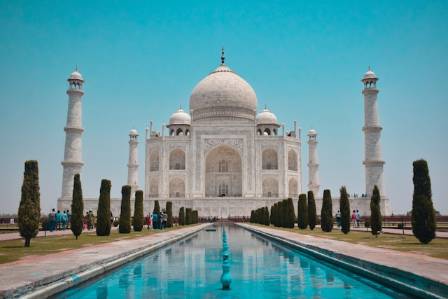
A magnificent entrance gate decorated with grand arches provides the first introduction to the Taj Mahal complex, which covers approximately 22 acres. As visitors continue through the gateway, the famous ivory-colored marble mausoleum gradually appears in the distance.
The Taj Mahal is dominated by a large central dome surrounded by four slender minarets arranged with remarkable symmetry. This balanced design gives the monument an impressive three-dimensional appearance. Its exterior is richly embellished with detailed marble inlay, elegant calligraphy, carved decorations, and intricate ornamental designs.
The white marble mausoleum, crowned by a dome approximately 35 meters high, forms the centerpiece of the complex. Around it are carefully arranged four-part Persian-style gardens, inspired by the descriptions of Paradise found in the Quran.
Pavilions, fountains, and reflecting pools enhance the carefully planned grounds, creating beautiful views of the monument. Nearby, the Yamuna River adds another peaceful element to the setting and further enhances the atmosphere surrounding the Taj Mahal.
2. A Story of Love and Loss
Although the Taj Mahal is celebrated as a symbol of everlasting love, its history is also marked by profound sadness. The monument is actually a vast mausoleum commissioned by the Mughal emperor Shah Jahan in memory of his beloved wife, Mumtaz Mahal. The inner chamber contains the cenotaphs of both Shah Jahan and Mumtaz Mahal.
According to the traditional story, Shah Jahan first encountered the woman who would become his wife in an Agra marketplace, where she was selling silk and beads. He was immediately captivated by her and continued pursuing her for five years before they married in 1612.
Their relationship ended in tragedy when Mumtaz Mahal died after giving birth to their fourteenth child.
Devastated by her death, Shah Jahan ordered the construction of the magnificent monument in her memory. Architects, artists, and craftsmen were brought together from across the region to create the extraordinary structure.
Construction continued for approximately 22 years and involved around 20,000 workers. Masons, stone cutters, inlay specialists, carvers, painters, calligraphers, dome builders, and other skilled artisans from India, Central Asia, and Iran contributed to the project.
Shah Jahan's own story later took another tragic turn. His son eventually removed him from power and confined him, where he spent his final years with a view toward the magnificent mausoleum built for Mumtaz Mahal.
3. A Masterpiece Carved in Stone
The Taj Mahal is celebrated not only for its overall form but also for the exceptional craftsmanship visible throughout the monument.
One of its most remarkable features is the extensive marble inlay work. Delicate floral designs, geometric decorations, and finely carved marble details are combined with precious and semiprecious stones in a technique known as pietra dura.
Artisans carefully embedded stones such as jasper, agate, black onyx, lapis lazuli, and amethyst into high-quality white marble brought from the quarries of Makrana.
The extraordinary level of precision can be seen throughout the monument, with even the smallest decorative elements receiving careful attention.
The Taj Mahal also brings together several artistic traditions. Persian architectural ideas were combined with Islamic design principles and Indian influences, producing a distinctive visual style that reflects the multicultural character of the Mughal Empire.
It is widely regarded as one of the greatest achievements of Indo-Islamic architecture.
4. Breathtaking Views and Changing Light
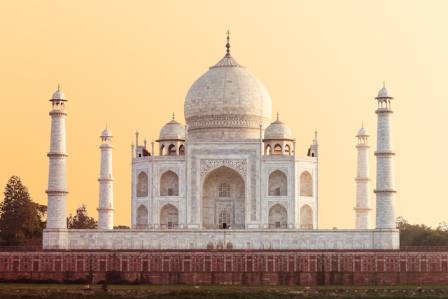
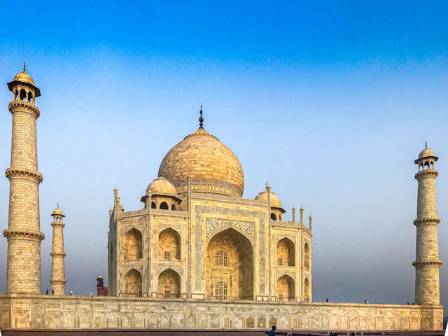
The Taj Mahal stands beside a bend in the Yamuna River, whose waters can create beautiful reflections of the monument. The riverfront setting is particularly striking around sunrise and sunset, when changing light dramatically alters the appearance of the marble.
At dawn, the sky may take on warm golden tones. As the day progresses, deeper blue shades appear, while sunset can introduce soft pink and orange colors. Under a full moon, the monument takes on an entirely different appearance, glowing against the night sky.
Visitors should explore different areas around the complex to discover varying perspectives of the Taj Mahal. Each viewpoint reveals different aspects of its symmetry, proportions, and surrounding landscape.
Whether illuminated by the warm light of morning, glowing beneath an evening sky, or appearing almost ethereal under moonlight, the Taj Mahal possesses a remarkable visual quality that remains captivating from every angle.
Practical Tips for Visiting the Taj Mahal
1. The Best Season to Go
The Taj Mahal can be visited throughout the year, but the cooler and drier months from October through March are generally more comfortable for exploring the monument.
The period from April through June can become extremely hot, with temperatures potentially reaching 122°F, or 50°C. The monsoon season generally occurs between July and September and can bring considerable rainfall.
2. The Ideal Time of Day
Most visitors need around two to three hours to explore the mausoleum, gardens, and other structures within the complex. Three hours is the maximum standard visiting period, while visitors entering for the special full-moon viewing experience are generally limited to 30 minutes.
Early morning is considered an excellent time to visit. Temperatures are more comfortable, visitor numbers are generally lower, and the soft morning light provides particularly attractive conditions for viewing and photographing the monument.
3. Where to Stay and Getting Around
Staying in the Taj Ganj area can make it easier to reach the Taj Mahal and other nearby attractions before the busiest periods of the day. Purchasing entrance tickets ahead of time is also advisable.
To help reduce pollution around the monument, conventional petrol and diesel vehicles are not permitted close to the entrance. Visitors are dropped off roughly 600 meters away and can either walk the remaining distance or use an electric vehicle.
A Luxury Stay Near the Taj Mahal
The Oberoi Amarvilas offers a luxurious accommodation option in Agra, with views of the Taj Mahal available from every room. The property draws inspiration from Mughal history through its grand interiors, antique-style decoration, and refined hospitality.
Guests can enjoy Mughal and international cuisine in an outdoor setting beside the swimming pool or arrange a private meal with the Taj Mahal providing a spectacular backdrop.
Beyond the Taj Mahal
Agra has much more to offer than the Taj Mahal. Adding several nearby experiences to an Agra itinerary provides a deeper understanding of the city's history, architecture, culture, and cuisine.
1. Visit Agra Fort
Agra Fort is another outstanding example of Mughal architecture and lies approximately 2.5 kilometers from the Taj Mahal.
Emperor Akbar, the grandfather of Shah Jahan, commissioned the fort in 1573. The enormous complex served as a Mughal royal residence and is now recognized as a UNESCO World Heritage Site.
Inside are impressive courtyards and historic structures, including Khas Mahal, Diwan-I-Aam, Jahangiri Mahal, and Moti Masjid.
The fort's elevated pavilions also provide remarkable views toward the Yamuna River and the Taj Mahal.
2. See Mohabbat – The Taj Mahal Story
For an evening cultural experience, visitors can attend Mohabbat – The Taj Mahal Story at the Cultural and Convention Centre.
The approximately 80-minute production combines dance and drama to tell the story of Shah Jahan and his love for Mumtaz Mahal.
Period-inspired scenery, elaborate costumes, theatrical performances, and lavish stage designs recreate the atmosphere of the Mughal era and offer a different way to experience the famous love story behind the monument.
3. Discover Agra Through Its Food
A culinary exploration is another excellent way to experience Agra. The city is filled with lively historic markets, traditional neighborhoods, and architectural landmarks.
Visitors can sample both royal dishes and popular street foods, many of which are based on recipes passed down through generations.
With the help of a knowledgeable local guide, travelers can learn about the flavors, traditions, and history of Mughal cuisine while discovering how the empire's culinary heritage continues to influence food in Agra today.
Experience the Taj Mahal and Agra
The Taj Mahal offers far more than a beautiful building to photograph. Its architecture, craftsmanship, gardens, history, and connection to one of the world's most famous love stories make it an extraordinary cultural destination.
Exploring the Taj Mahal alongside Agra Fort, local markets, traditional cuisine, and cultural performances can provide a much richer understanding of the city and its Mughal heritage. Whether visiting for the first time or returning to experience the monument under different light, Agra offers countless ways to appreciate one of India's most enduring treasures.
Nearby stops
 STOP
· en
10 Fascinating Facts About Penguins
David Smith
 STOP
· en
Albatrosses: Inspiring Legends & Myths
Lucian West
 STOP
· en
Which Is Better: 7-Seater SUV, MPV or 8-Seater Car?
Noah Williams
 STOP
· en
SpaceX’s Starship: Can the World’s Most Powerful Rocket Overcome Its Explosive Past?
Theodore
 STOP
· en
Are Strawberries Good for You?
Dr. Emily Hartwell
 STOP
· en
3 Active Beach Games for Your Summer Getaway
Olivia Garcia