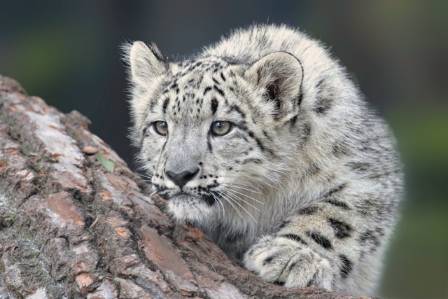
The snow leopard (Panthera uncia) is one of the most enigmatic and captivating big cats on Earth, a master of survival in the harshest high-altitude environments. Nicknamed the “mountain ghost” for its shy, reclusive nature, this spotted feline rarely reveals itself to human eyes, making it a symbol of the wild, untamed beauty of Asia’s mountain ranges. With a set of extraordinary adaptations tailored to its icy habitat, the snow leopard stands as a testament to nature’s ingenuity—yet it faces mounting threats that push this vulnerable species closer to the brink. Below is a detailed exploration of its biology, habitat, behavior, and the urgent efforts to protect it.
Basic Profile: A Master of High-Altitude Survival
Adapted perfectly to thrive in frigid, rocky terrain, the snow leopard boasts a suite of physical traits that set it apart from other big cats. Adults measure 4 to 5 feet in body length, with a tail stretching up to 36 inches—nearly as long as their body—while their weight ranges from 60 to 120 pounds. Their thick, dense fur comes in shades of gray or creamy yellow, dotted with grayish-black spots that act as camouflage against the snow and rock of their mountain home, allowing them to stalk prey undetected. Wide, fur-covered paws serve as natural snowshoes, distributing their weight evenly to prevent sinking into deep snow and insulating their feet from the freezing ground. Equipped with powerful legs, snow leopards are phenomenal jumpers, capable of leaping up to 50 feet in a single bound—an essential skill for ambushing prey on steep slopes. Their long, muscular tails play two critical roles: they provide balance during high-speed chases and leaps, and they can be wrapped around sensitive body parts like the face and paws to shield against the severe mountain chill, acting as a cozy, built-in blanket. Classified as Vulnerable on the IUCN Red List, snow leopards have a decreasing population trend, a sobering reminder of the challenges they face in the wild.
Habitat: Roaming the Rugged Mountain Ranges of Asia
Snow leopards claim a vast yet fragmented range across the high mountains of Central and South Asia, spanning 12 countries including China, Nepal, India, Pakistan, Russia, and Mongolia. They inhabit some of the planet’s most rugged terrain, from the towering peaks of the Himalayas and the Hindu Kush to the southern Siberian mountains and the expansive Tibetan Plateau. These big cats favor steep, rocky slopes with sparse vegetation and rocky outcrops—landscapes where prey is scarce but where their camouflage and agility give them a competitive edge. Because prey is so limited, snow leopards require enormous territories to roam and hunt: male leopards need up to 80 square miles of space, an area larger than three Manhattans, while females have smaller but still substantial ranges of up to 48 square miles. Unfortunately, their habitat is increasingly fragmented by human activities, from roads and mining operations to livestock grazing, which splits their territories into isolated patches and makes it harder for snow leopards to find mates and access food.
Diet and Hunting: Apex Predator of the Alpine Wilds
As apex predators of the alpine ecosystem, snow leopards play a crucial role in regulating the populations of their prey species, maintaining the delicate balance of their mountain habitat. Their primary food source is the blue sheep (bharal) of Tibet and the Himalayas, as well as the mountain ibex, a sure-footed goat-antelope found across most of their range. These prey animals are perfectly adapted to steep, rocky terrain, but they are no match for the snow leopard’s stealth and speed: the big cat stalks its target silently, using rock formations and snowdrifts for cover, before launching a sudden, powerful ambush. Snow leopards are so strong that they can kill animals three times their own weight, dragging their prey to a safe, elevated spot to feed undisturbed by scavengers like wolves and vultures. When large prey is scarce, they also hunt smaller animals, including marmots, hares, game birds, and even domestic livestock when wild prey is hard to find. A notable study of a protected snow leopard in an Indian national park recorded that the cat consumed five blue sheep, nine Tibetan woolly hares, 25 marmots, five domestic goats, one domestic sheep, and 15 birds in a single year—a testament to its flexible diet and hunting prowess.
Threats to Survival: Facing an Uphill Battle
Despite their formidable hunting skills, snow leopards face a litany of threats that have caused their population to decline by at least 20 percent over the past two decades. The most pressing danger is human-wildlife conflict, driven by the expansion of human settlements and livestock grazing into snow leopard territory. As herders bring more sheep and goats into the mountains, they compete with snow leopards for space, and when the big cats prey on domestic livestock to survive, herders often retaliate by killing them. Poaching is another deadly threat: snow leopards are hunted illegally for their beautiful fur, which is sold on the black market, and for their body parts, which are used in traditional Chinese medicine. Even though international trade in snow leopard parts is banned under CITES (the Convention on International Trade in Endangered Species), poaching continues to be a major problem in many parts of their range. Compounding these issues are habitat loss and the decline of wild prey species, as overgrazing by livestock destroys the vegetation that supports blue sheep and ibex. Climate change is also emerging as a critical threat: rising temperatures are melting glaciers and shrinking the alpine meadows that snow leopards depend on, forcing them to move higher up mountains in search of suitable habitat—where space is limited and competition with other predators like leopards, wild dogs, and tigers is fierce.
Conservation Efforts: Safeguarding the Mountain Ghost
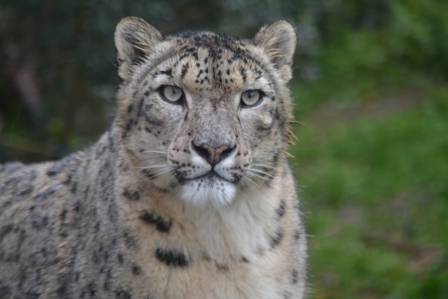
In recent years, a global, concerted effort has been launched to save the snow leopard from extinction, bringing together governments, conservation groups, local communities, and scientists. One key strategy is the establishment of protected areas throughout the snow leopard’s range, including sanctuaries in Afghanistan, Mongolia, and Kyrgyzstan. Kyrgyzstan’s mountain reserves are particularly vital, as they serve as a corridor that allows snow leopards to travel between the northern and southern ends of their range, facilitating gene flow and helping to maintain healthy, connected populations. However, creating protected areas alone is not enough: a study found that 40 percent of these reserves are too small to support the snow leopard’s wide-roaming lifestyle, meaning that many cats still venture outside protected zones where they face risks from humans. To address this, conservationists are working closely with local herders to develop non-lethal solutions to reduce human-wildlife conflict, such as building predator-proof corrals to protect livestock and implementing compensation schemes for herders who lose animals to snow leopards. Governments are also strengthening anti-poaching laws and enforcement, cracking down on illegal trade networks. Additionally, efforts to raise public awareness about the snow leopard’s role as a flagship species are underway: as a symbol of its alpine ecosystem, protecting snow leopards also helps to conserve the countless other species that share their habitat, from marmots and birds to rare plants and insects.
 STOP
 STOP
 STOP
 STOP
 STOP
 STOP